The UK Sustainability Reporting Standards (UK SRS) are the UK’s domestic implementation of the IFRS S1 and S2 sustainability disclosure frameworks. For UK premium-listed companies, mandatory reporting begins with financial years starting on or after 1 January 2027. Larger private companies and the rest of listed companies follow in subsequent years.
What this means in practice: companies will need to disclose material sustainability-related risks and opportunities (S1) and, more specifically, climate-related financial disclosures including Scope 1, 2, and 3 emissions (S2). The disclosures must be auditable, consistent across reporting periods, and comparable to prior years.
None of that is possible without the right data infrastructure. And most UK companies don’t have it yet — which is precisely the gap that software has to fill.
What data you need to collect
The IFRS S2 climate standard requires data that most companies currently hold in multiple disconnected systems: energy consumption from facilities management, travel emissions from HR or finance tools, supply chain data from procurement, and product lifecycle data from operations. The first challenge is integration, not reporting.
Beyond the data itself, the UK SRS requires that disclosures follow a consistent methodology and that the methodology is documented. This means the software solution needs to track not just the numbers but the assumptions, conversion factors, and data sources behind them.
What software UK companies need to build or buy
The software layer for UK SRS compliance typically needs to handle four things:
Data collection and integration. Pulling emissions and sustainability data from existing systems — ERP, HR, facility management, supply chain platforms — and normalising it into a consistent format.
Calculations and methodology engine. Applying the right emission factors, conversion rates, and scope boundaries to raw data. This needs to be auditable and updatable as standards evolve.
Reporting and disclosure generation. Producing the actual reports in the format required by auditors and the FCA. Ideally automated, with clear audit trails.
Scenario modelling. S1 requires disclosing how climate risks affect the business. That means running scenarios, which requires modelling tools on top of the data.
Some of this can be handled by off-the-shelf ESG platforms. Some of it needs custom development, especially the data integration layer — because no two companies have the same systems.
Build vs buy: which makes sense for your company
Scenario
Recommended approach
Reason
Standard reporting needs, common systems (SAP, Oracle, Salesforce)
Off-the-shelf ESG platform
Faster to deploy; connectors already exist for major systems
Multiple reporting frameworks (GRI, TCFD, UK SRS simultaneously)
Custom or hybrid
Most platforms handle one framework well, not three in parallel
The honest answer for most mid-sized UK companies is hybrid: buy a reporting platform for the front-end disclosure layer, and build custom integrations to feed it clean, structured data from existing systems. The custom work is where the real cost and complexity lives.
Timeline and cost reality check
Companies that have gone through similar compliance projects (GDPR, IFRS 16) underestimated the data preparation phase almost universally. For UK SRS, data preparation — identifying what data exists, where it lives, how clean it is, and how to standardise it — typically takes longer than the software build itself.
A realistic timeline for a mid-sized UK company starting from scratch:
Months 1-2: Data audit and gap analysis — what data exists, in what format, how complete
Months 3-5: Integration development — connecting existing systems to the ESG data layer
Months 6-7: Reporting and calculation engine — applying methodology, building audit trails
Month 8+: Testing, refinement, and first reporting cycle dry run
For FY2027 compliance, that means starting no later than Q1 2026 — which is now. Companies that haven’t started yet are already behind.
Where to start if you haven’t started yet
The most useful first step is a data audit: not a software decision, not a vendor selection, but a clear map of what sustainability data you currently hold and where. That audit drives every subsequent decision about what to build, what to buy, and how much it will cost.
At Yeeply, we work with certified development teams across the UK — and for projects with tighter budgets, we also work with Spanish teams offering equivalent technical expertise at 30–40% lower cost. If you’re starting to think about the software side of UK SRS compliance, you can request a quote using the button at the top right of yeeply.com/en or email sales@yeeply.com.
What AI systems are already banned in Europe under the EU AI Act since February 2025: emotion recognition at work, social scoring, real-time biometric identification and more.
What is RAG? A plain-English guide to AI that answers from your company's documents: how it works, permissions, security, costs and use cases. Prices included.
Step-by-step AI Act compliance roadmap for 2026: which deadlines have already passed, what August 2026 brings, and how to prioritise actions based on your AI system type.
Practical guide to the EU AI Act 2026: risk pyramid, who must comply, deadlines already in force and fines of up to €35M. What UK businesses developing or using AI need to know.
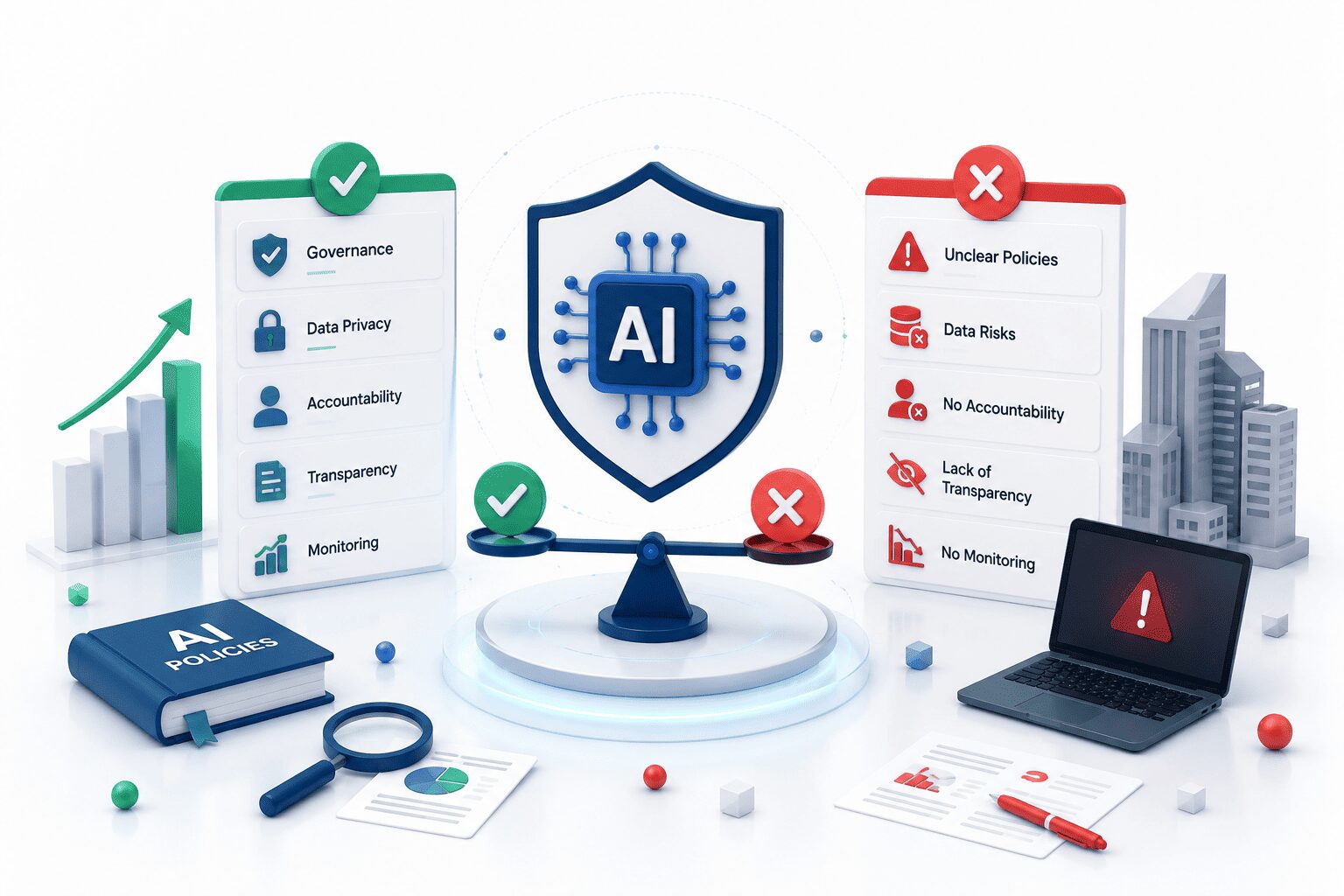
What good AI governance looks like in practice for UK enterprises: what companies are getting right, what they miss, and the regulatory landscape for 2026.
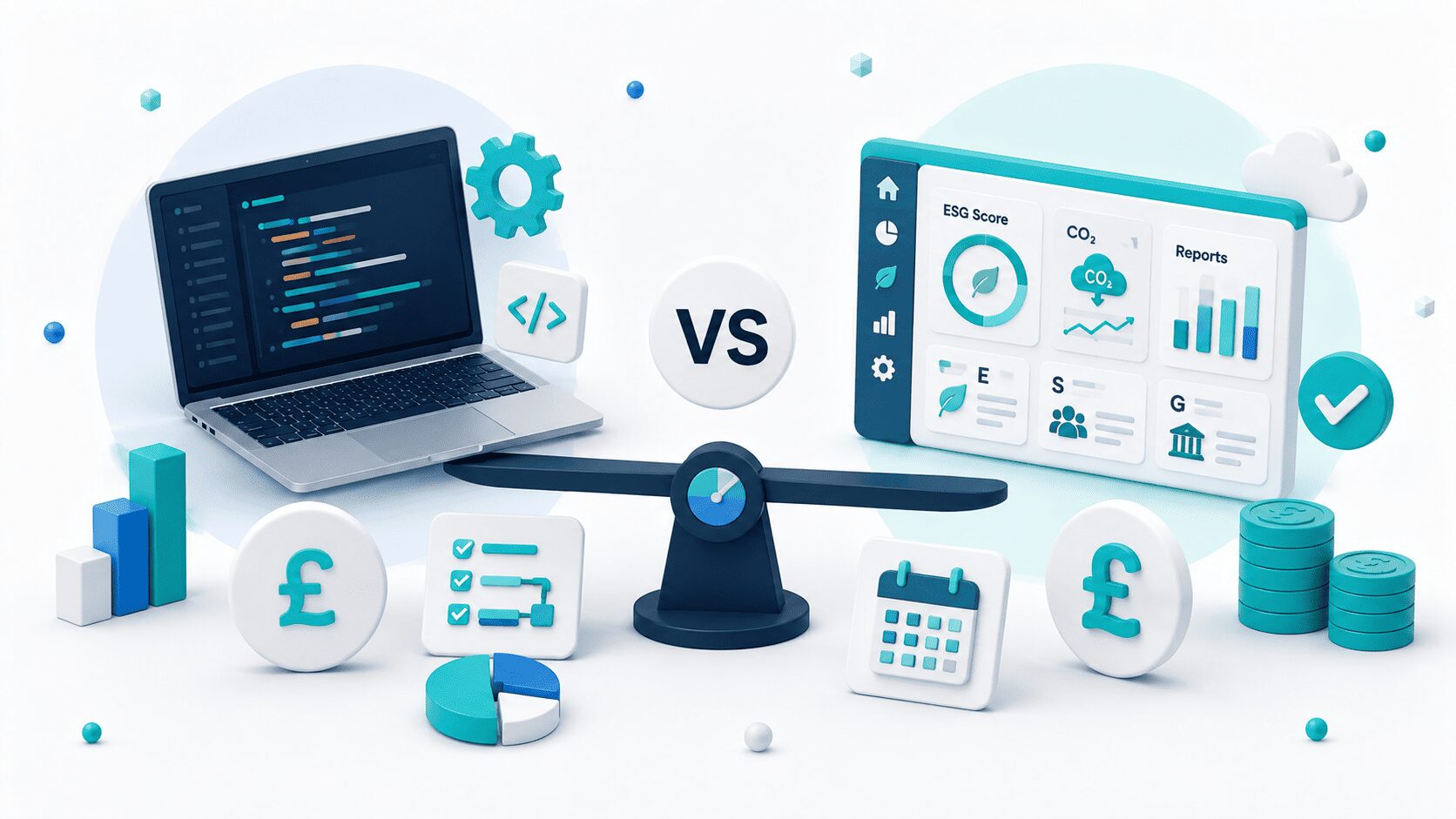
Build vs buy for ESG reporting software: licence costs, integration reality, and when custom development makes more sense than an off-the-shelf platform.
Real penetration testing prices in the UK for 2026: from £3,000 for a basic web pentest to £80,000 for red team. What's included, what drives costs, and how to hire without overpaying.
Enterprise app development costs in 2026 vary widely by project type, technology, and team location. Here are real price ranges and what drives them up or down.
An MVP in 6 weeks is achievable — if you know what to put in it. This guide covers the phases, what to cut, realistic costs, and how to measure whether it worked.